Structural Drying in San Marcos, TX
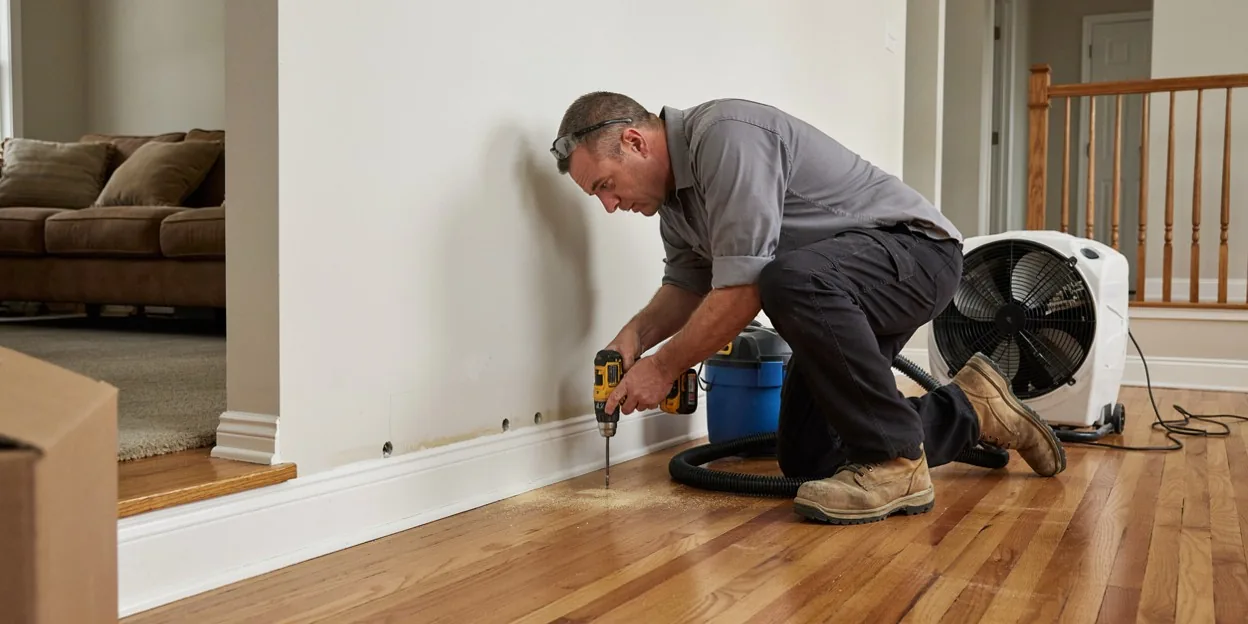
The plumber fixed the line under the kitchen on Tuesday. By Thursday the baseboards along the dining room wall had a ridge in them and the room smelled like a gym bag. The water is out of sight, but it is not out of the house. It is in the bottom of the drywall, the cabinet toe kicks, and the top inch of a slab that has been soaking for a week. This site passes your call to an independent local provider who does structural drying in San Marcos and across Hays County.
Drying a Hays County house in August, when the air is already full
The crew starts by metering, not by setting out fans. Every wall, cabinet base, and floor section near the leak gets a reading, and so do the rooms beside it. Then the equipment goes where the numbers say. Air movers keep air moving over the wet surfaces so the moisture inside can work its way out. Dehumidifiers pull that moisture out of the air before it settles somewhere else. In a San Marcos summer the outside air is often wetter than the room, so an open window works against you.
The gear usually runs for three to five days. The crew comes back to read the meters, move equipment as sections dry, and pull it when the materials reach their target. Final readings, not the way the wall feels, end the job.
While the equipment hums in your living room
Leave it running. Shutting it off overnight to sleep adds a day to the job. Keep doors to the wet rooms closed if the crew asks, so the dehumidifiers work on a smaller volume of air. Keep children and pets clear of the cords and the hot exhaust. Ask the crew which rooms you can use and which to stay out of, and ask them to show you one reading so you know what dry looks like on the meter.
What dries in place, and what has to come out first
Painted drywall above the water line often dries in place. The bottom foot, where it wicked water from the slab, is a judgment call based on the reading and on whether the water was clean. Insulation inside a wet wall rarely dries and usually comes out through a cut along the bottom of the wall. Tile stays. Laminate with a swollen core goes. Solid wood cabinets can often be dried from inside and underneath; particleboard bases cannot.
For each material, the question is the same: can it reach its dry target in a reasonable number of days, and was the water clean enough that drying is the right answer? If the water came from a drain or from the Blanco, the answer changes, and flash flood cleanup rules apply.
Why slabs, clay, and limestone change the drying plan here
Every house built in San Marcos since the 1960s sits on a slab, and the slab itself holds water. Concrete is slower to give moisture back than drywall, so a floor that was flooded for days keeps feeding the bottom of the walls after they look dry. East of I-35, where the Blackland clay holds moisture under the slab, the problem lasts longer. West of the interstate, on limestone, the slab dries faster but the houses often have more tile and stone that trap water in the grout.
If the drying stalls in one area, the leak may not be fixed. The provider will say so and bring in leak detection before spending another week on equipment. If the water came from a tank in the attic or the garage, water heater leak cleanup covers the ceiling and the walls below, and the drying plan starts up there.
A sudden pipe failure is the kind of loss many Texas policies respond to; a slow leak that fed the wall for months is often treated as gradual. Either way, ask the crew for the daily readings and the drying log so the adjuster sees how long the house was wet and when it reached dry.
Call before the smell gets worse
Tell us where the water was, when the leak was stopped, and which walls or floors still feel cool or soft. Mention any baseboard that has swollen or any paint that has bubbled. Call (737) 283-4979 and describe what you notice.